Lockout Tagout LOTO Procedures WPR Guide
Executive Technical Summary
Uncontrolled release of hazardous energy during equipment maintenance remains a critical cause of catastrophic industrial fatalities. This technical reference guide outlines mandatory execution protocols for Lockout/Tagout (LOTO) under Saudi Aramco General Instruction GI 6.012, SABIC SHEM standards, and OSHA 29 CFR 1910.147. Work Permit Receivers (WPR) must master systematic isolation, padlocking, tagging, atmospheric bleeding, and mandatory try step verification to guarantee a true zero energy state before authorizing mechanical intervention.
Join Saudi Arabia’s Premier Industrial Safety Network
Access verified WPR exam practice questions, Aramco/SABIC safety updates, and technical loss prevention resources on our official WhatsApp channel.
Regulatory Scope and Engineering Scope of Hazardous Energy Control & lockout tagout LOTO procedures WPR
Industrial machinery across hydrocarbon refineries, gas processing plants, and chemical manufacturing complexes operates on complex multi-source energy systems. Under Saudi Aramco GI 6.012 and SABIC SHEM energy control specifications, hazardous energy comprises electrical potential, mechanical movement, hydraulic pressure, pneumatic force, thermal energy, chemical inventory, and stored kinetic or gravity potential. Lockout/Tagout (LOTO) is the systematic placement of positive locking devices and standardized warning tags on energy-isolating mechanisms to guarantee equipment cannot be energized or started accidentally while personnel perform inspection, maintenance, or repair.
Work Permit Receivers (WPR) share direct field responsibility with Operations Issuers to ensure LOTO isolation integrity. Relying solely on control systems, soft-keys, push-buttons, emergency stop buttons, or programmable logic controller (PLC) interlocks as energy isolation devices is strictly prohibited by governing Aramco and SABIC engineering standards. Physical mechanical isolation at the primary breaker, disconnect switch, valve body, or blind flange is non-negotiable.
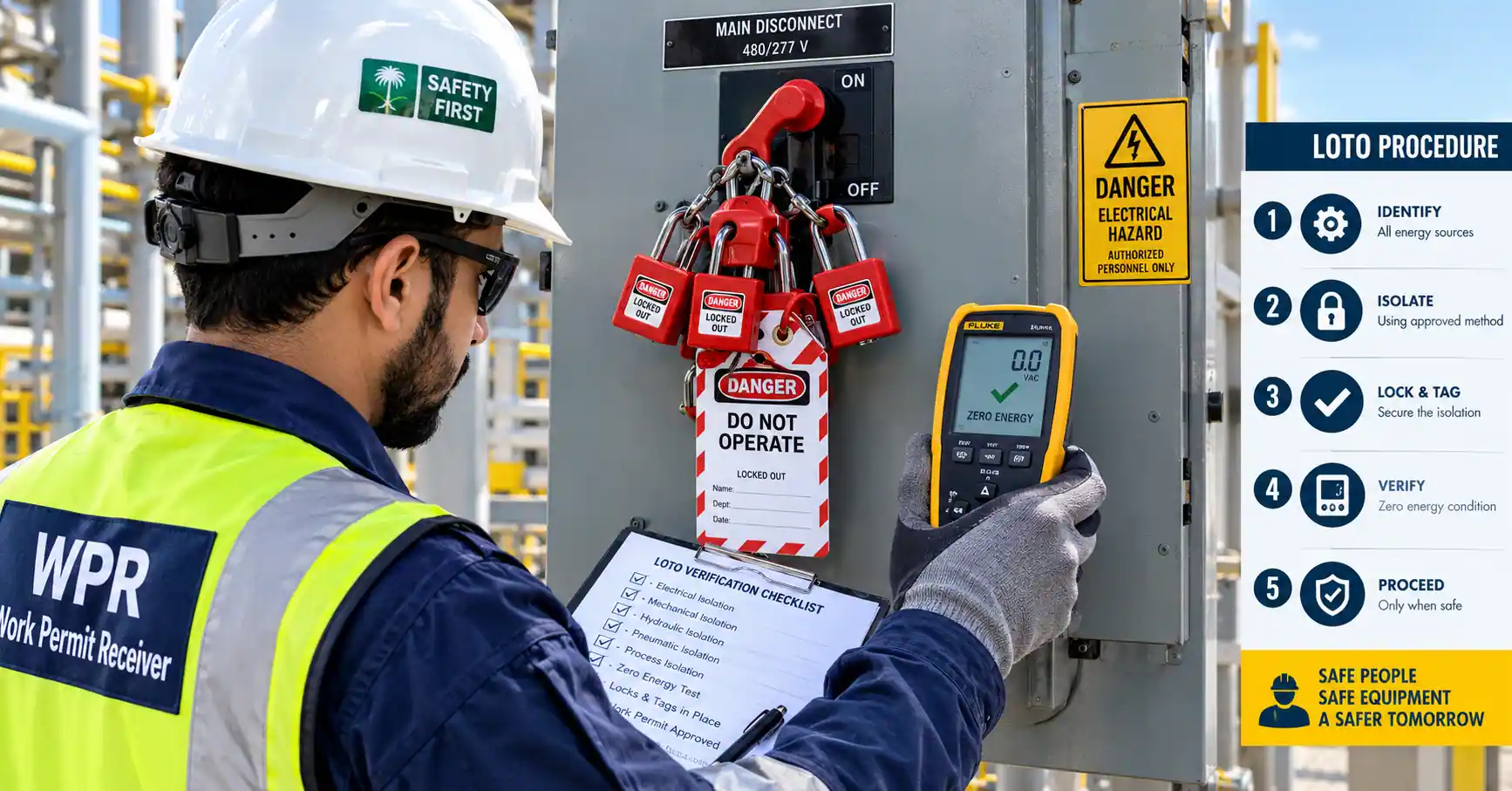
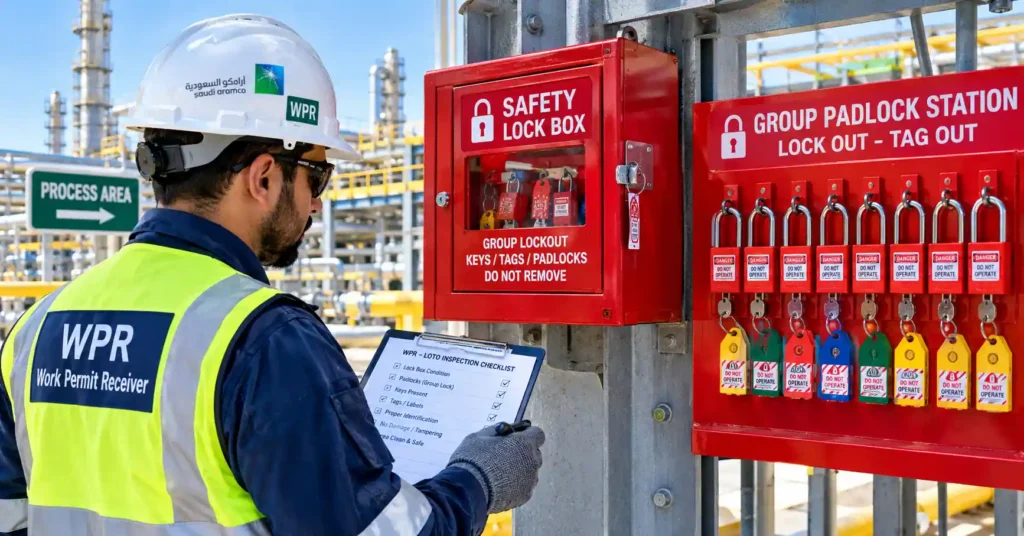 A Work Permit Receiver checks group lockout padlocks, safety tags, and the lock box as part of industrial Lockout/Tagout (LOTO) safety procedures.
The 6 Step Standard Operating Procedure for LOTO Execution
(lockout tagout LOTO procedures WPR)
Achieving a safe work environment requires executing an unbroken sequence of energy control steps. Any omission in sequence exposes maintenance technicians to severe electrical shock, chemical release, or high-torque mechanical impacts.
- Notification and Preparation: Authorized personnel must notify all affected plant operators regarding the scope of shutdown, equipment tags, and specific energy sources slated for isolation.
- Equipment Shutdown: Shut down the machinery using established operational shut-off routines. Ensure process flows are halted systematically to eliminate thermal or pressure shocks on process lines.
- Energy Isolation: Operate all primary energy-isolating devices—such as racking out electrical circuit breakers, pulling line switches, closing main line valves, and dropping physical mechanical blocks.
- LOTO Device Application: Attach standardized red safety padlocks and weather-resistant danger tags directly to energy-isolating mechanisms. Every individual working on the isolated equipment must apply their personal padlock to a multi-lock hasp or lock box.
- Stored Energy Dissipation: Bleed residual pressure from hydraulic and pneumatic lines, vent trapped gaseous hydrocarbons to flare, drain liquid chemical pockets, ground electrical charge banks, and pin or block mechanical components subject to gravitational movement.
- Zero Energy State Verification (Try Step): Attempt to start or energize the isolated unit locally using start switches, field push-buttons, or remote controls while personnel are positioned safely clear. Confirm zero movement or pressure, then return control switches to the “OFF” position.
[My Site Experience: Why Electrical LOTO Alone Is Not Enough
During pump maintenance at a gas-oil separation plant (GOSP) in Abqaiq, one important lesson from industrial safety is that isolating the electrical supply does not automatically make the equipment safe to open. Before maintenance begins, the team must confirm that all relevant energy sources have been identified, isolated, and verified according to the approved Lockout/Tagout (LOTO) procedure.
According to (lockout tagout LOTO procedures WPR)
Imagine a situation where the pump motor breaker has been racked out and locked, and the maintenance team is preparing to open the pump casing. Everything may look safe from the electrical side, but pressure or trapped hydrocarbons could still remain inside the pump. A leaking or defective valve could also allow process fluid to enter the isolated section again. If someone starts loosening the casing bolts without confirming the equipment’s condition, pressurized liquid or hazardous hydrocarbons could escape and cause serious injury.
This is where a Work Permit Receiver (WPR) must pay attention to the actual site conditions, not just the paperwork. Before accepting the job, I would check the approved work permit and isolation documentation, coordinate with the permit issuer and Operations team, and confirm that the isolation arrangements match the equipment being worked on. The team must identify all relevant energy sources, including electrical, mechanical, hydraulic, pneumatic, and process pressure, wherever applicable.
The next step is to verify that the equipment has been depressurized, drained, and vented through the designated points in accordance with the approved procedure. Workers must never assume that a closed valve guarantees safe isolation. Where required, the isolation must be secured against leakage or re-pressurization, and the specified verification checks must be completed before the equipment is opened. If pressure returns, liquid continues to escape, or site conditions differ from the permit and isolation plan, stop the job and contact Operations and the permit issuer.
Another important point is communication during the toolbox talk (TBT). Every worker should understand the job boundaries, isolation points, residual-energy hazards, emergency arrangements, and the conditions that require work to stop. The team should also confirm that the correct tools and personal protective equipment (PPE) are available and that nobody removes another person’s lock or bypasses an isolation control.
The main lesson is simple: electrical isolation is only one part of making equipment safe for maintenance. Effective LOTO requires identification, isolation, control, and verification of all relevant hazardous energy sources. As a WPR, never rely on a signed permit or the assumption that equipment is safe. Verify the conditions at the job site, follow the approved site procedure, and do not allow work to proceed until the required safety checks are complete.
Safety reminder: This example explains general industrial safety principles. Actual isolation, depressurization, draining, testing, and equipment-opening steps must follow the site’s approved procedures and the responsible Operations team’s instructions.]
Comparison Matrix: Single User LOTO vs Group Lockout Systems
Depending on organizational complexity and maintenance shift duration, energy control is executed through either individual or group lockout protocols. The following technical comparison breaks down procedural parameters under Saudi Aramco GI 6.012 and SABIC SHEM standards.
| Isolation Parameter | Individual (Single-User) LOTO | Group Lockout System (Lock Box) | Regulatory Mandate |
|---|---|---|---|
| Operational Scope | Single technician, simple single-point isolation | Multi-craft turnarounds, complex multi-point facilities | GI 6.012 Section 4.2 |
| Lock Key Distribution | Technician holds single unique key personally | Isolation keys secured inside Master Lock Box | Zero duplicate keys allowed |
| WPR Responsibility | Applies personal lock directly to isolation point | Verifies boundary locks, applies personal lock to box | Joint verification required |
| Shift Handover Method | Direct lock-to-lock swap at isolation site | Key box transfer with incoming WPR sign-off | Continuous lock coverage mandatory |
Technical Safety Highlight
Master locks placed on primary isolation valves or circuit breakers during group LOTO must utilize uniquely keyed locks matching a dedicated lock certificate index. Master keys must remain locked inside the Lock Box, which is then sealed by individual personal safety locks belonging to every working technician and the certified WPR.
Verification of Zero Energy State (Zero Energy Test)
Physical isolation is incomplete without testing for residual potential. The Zero Energy Verification procedure requires a rigorous three-point test approach depending on energy form:
- Electrical Verification: Qualified electricians must perform voltage testing using a calibrated multimeter rated for the circuit class. The meter must be tested on a known live source before testing the isolated circuit, followed immediately by re-testing the meter on a live source to confirm meter functionality (Live Dead Live method).
- Mechanical and Hydraulic Verification: Visually inspect pressure gauges, open drain bleed valves, and manipulate mechanical arms to ensure zero back-pressure or bound mechanical spring tension remains stored within internal chambers.
- Thermal and Chemical Verification: Touch testing is prohibited. Calibrated surface pyrometers must verify process piping has cooled to ambient temperatures, while low-point bleeds confirm line contents are fully evacuated.
Scenario Based (Lockout/Tagout LOTO procedures) WPR Examination Practice MCQs
Test your operational readiness for Saudi Aramco and SABIC Work Permit Receiver certification assessments with these technical field scenarios:
Q1: A maintenance crew arrives to replace a mechanical seal on a high pressure amine pump. The breaker is turned off at the substation, but no padlock or tag is applied because the electrician states the job will take under 15 minutes. What is the mandatory duty of the certified WPR?
- A) Permit work to begin immediately if the job takes less than 15 minutes.
- B) Halt work execution, refuse permit issuance, and mandate physical LOTO padlock placement and tagging under GI 6.012.
- C) Station a worker near the breaker panel instead of applying a padlock.
- D) Proceed with the work provided low-voltage gloves are worn.
Correct Answer: B
Engineering Rationale: Time duration never exempts equipment maintenance from LOTO compliance under Saudi Aramco GI 6.012. Operating without physical padlocks and tags applied to energy-isolating devices constitutes a major safety violation.
Q2: During a complex group lockout on a naphtha hydrotreater unit, who is permitted to remove a technician’s personal safety lock from the Master Lock Box if the technician leaves the plant site without removing it?
- A) Any fellow crew member working on the same shift.
- B) The Work Permit Receiver using a bolt cutter.
- C) Only the Operations Superintendent or authorized Plant Manager, following strict emergency lock removal procedures and positive verification that the technician is off-site.
- D) The safety officer on duty without formal documentation.
Correct Answer: C
Engineering Rationale: Removing an abandoned personal lock is strictly governed by emergency lock removal protocols requiring higher plant management approval, physical search verification, and documented safety clearance to prevent premature re-energization.
Essential Industrial Safety Resources
Strengthen your site safety management expertise across all hydrocarbon work domains:
- Review overall certification standards in our Saudi Aramco WPR Exam 2026 Guide.
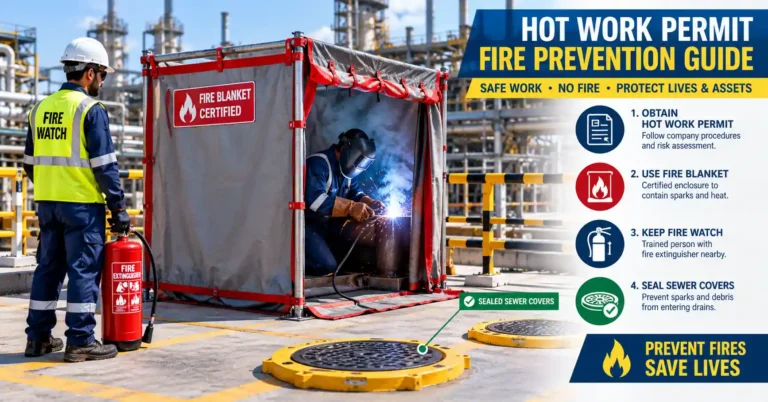
- Master thermal cutting and welding safety rules in our Hot Work Permit Requirements and Fire Prevention Guide.
What is the primary standard governing LOTO in Saudi Aramco facilities?
Saudi Aramco General Instruction GI 6.012 (Isolation, Lockout and Use of Hold Tags) serves as the primary standard governing all hazardous energy control operations across Aramco plants and project sites.
Can emergency stop buttons or PLC switches be used for LOTO isolation?
No. Emergency stop buttons, soft-key control panels, and selector switches are control circuits, not primary energy-isolating devices. Physical mechanical disconnection at the breaker or disconnect switch is mandatory.
What is a Live Dead Live test in electrical zero energy verification?
A Live Dead Live test requires an electrician to test a voltage meter on a known live electrical source, test the isolated target circuit to confirm zero voltage, and immediately re-test the meter on the live source to prove instrument integrity.
Who holds the keys to individual personal safety padlocks during a LOTO activity?
The individual technician performing work must retain sole possession of the unique key for their personal padlock at all times throughout the maintenance task to prevent accidental lock removal by others.
Author Engineering Credentials & Technical Governance
Lead Author: Senior Technical Safety Engineer & Industrial Loss Prevention Consultant holding over 15 years of operational expertise in oil, gas, and petrochemical complexes across Eastern Province, Saudi Arabia (Saudi Aramco facilities, SABIC Petrokemya, Hadeed, Sharq, Arrazi, and Yanpet).
Governing Industrial Standards & Codes Referenced:
- Saudi Aramco General Instruction GI 6.012 (Isolation, Lockout and Use of Hold Tags)
- SABIC Environment, Health, Safety, and Security Standard SHEM-08 (Hazardous Energy Control / LOTO)
- US OSHA 29 CFR 1910.147 (The Control of Hazardous Energy – Lockout/Tagout)
- National Fire Protection Association NFPA 70E (Standard for Electrical Safety in the Workplace)